Tooth Sensitivity: Why It Happens and What Actually Helps
Why does cold water make my teeth zing?
Under the hard white enamel of a tooth is a softer layer called dentine. It is full of microscopic channels that lead toward the nerve. When enamel wears away or gums recede, those channels are exposed, and hot, cold, sweet or even cold air can reach the nerve. The result is a short, sharp pain.
Sensitivity is very common, and it is usually manageable. It can also be a warning sign, so it is worth understanding what is behind it.
Common causes
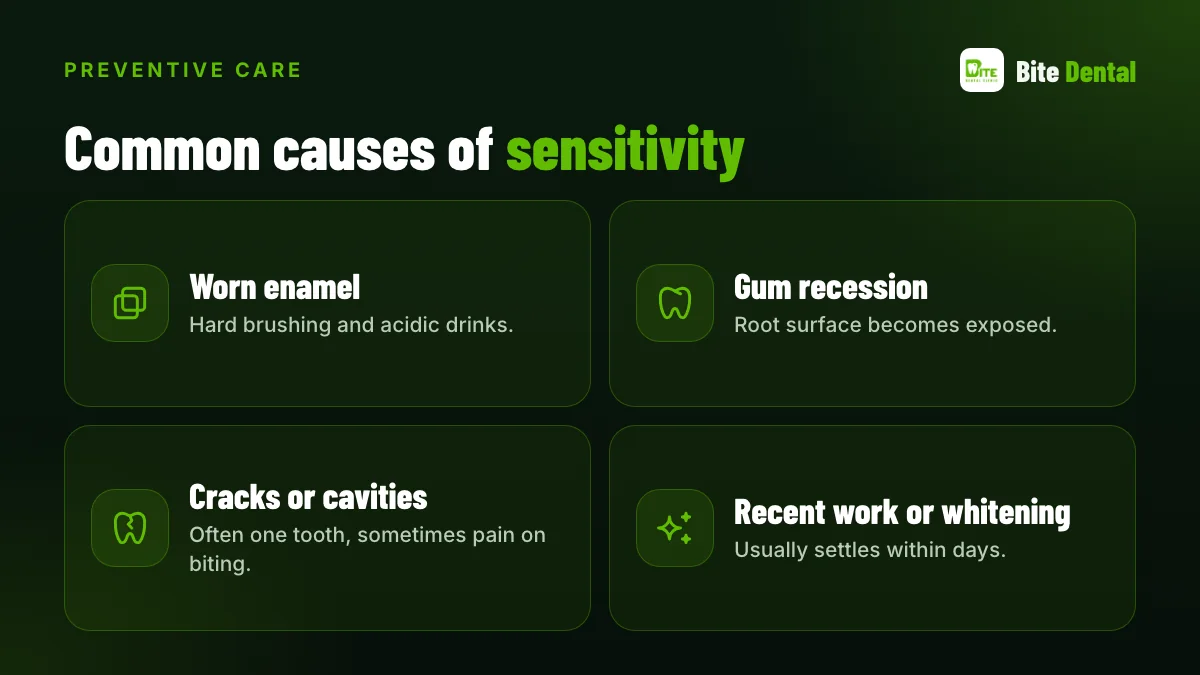
- Worn enamel. Brushing hard, acidic drinks (fizzy drinks, citrus, sour sweets) and grinding can thin enamel over time.
- Gum recession. When gums pull back, the root surface is exposed. Gum disease and hard brushing are common causes.
- Cavities. A new or deep cavity often shows up first as sensitivity to sweet or cold.
- Cracked or chipped teeth. Pain when you bite or release pressure can point to a crack.
- Teeth grinding (bruxism). Night grinding wears enamel and can crack teeth.
- Recent dental work or whitening. Short-term sensitivity after a filling, cleaning or whitening is common and usually settles.
- A worn filling or a loose crown that lets bacteria or temperature changes in.
What helps at home
- Use a toothpaste made for sensitive teeth (for example, containing potassium nitrate or stannous fluoride) and use it consistently for a few weeks. Rub a little on the sensitive area before bed rather than rinsing it all off.
- Switch to a soft brush and brush gently with small circles. Hard scrubbing wears the tooth surface and pushes gums back.
- Limit acidic drinks, and drink them with a straw or finish with water. Wait about 30 minutes after acidic food before brushing.
- Avoid very hot and very cold extremes while the tooth settles.
- Do not skip brushing because it hurts. Plaque makes things worse.
What we can do at the clinic
Depending on the cause, your dentist may:
- Apply fluoride varnish or desensitising agents to the exposed areas
- Bond the exposed root surface with a tooth-coloured material
- Treat a cavity or replace a leaking filling
- Repair or crown a cracked tooth
- Treat gum disease and advise on the right brushing technique
- Make a night guard if you grind your teeth
- Perform a root canal if the nerve is damaged and the pain lingers
When to see a dentist soon
- Pain that lingers for minutes after the trigger is gone
- Pain that wakes you at night or happens without a trigger
- Pain when biting
- Swelling or a bad taste
- Sensitivity limited to one tooth, which often means a specific problem
These signs can have different causes, such as a cavity, a cracked tooth or gum disease, and only an examination and X-ray can tell which. A tooth with a nerve infection will not settle with toothpaste alone. Our guide to single-visit root canals explains when a root canal is needed.
Whitening and sensitivity
Many people get temporary sensitivity during or after whitening. We can lower the chance by using professional-grade protection and advising a desensitising routine. It usually fades within a few days. If you already have sensitive teeth, mention it before whitening so we can plan around it. See our teeth whitening page.
Book a sensitivity check at Bite Dental: A-52, Meera Bagh, New Delhi 110087 (+91 75339 51611) or MedHarbour Hospital, 1st Floor, Room 222, Sector 51, Gurugram 122003 (+91 98106 64561). Open Monday to Saturday, 10 am to 8 pm. This article is general information and not a substitute for an examination.