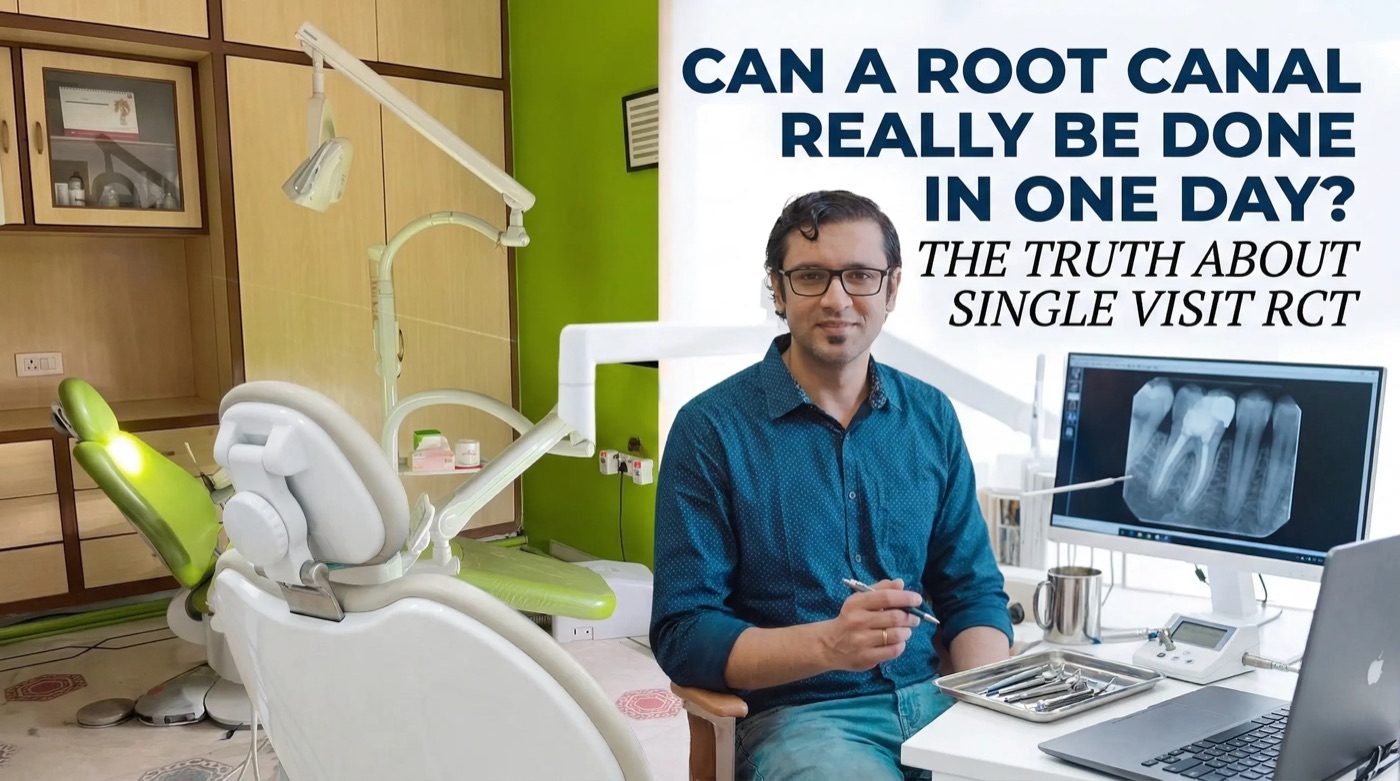
Can a Root Canal Really Be Done in One Day? The Truth
The Root Canal's Reputation Problem
Few procedures carry as much unearned fear as the root canal. In surveys, people routinely say they'd rather give a public speech, sit an exam, or even deal with tax returns than have a root canal.
Most of that fear dates back decades — to a time when the procedure genuinely was multi-visit, uncomfortable, and unpredictable. That era is over.
What Is a Root Canal, Actually?
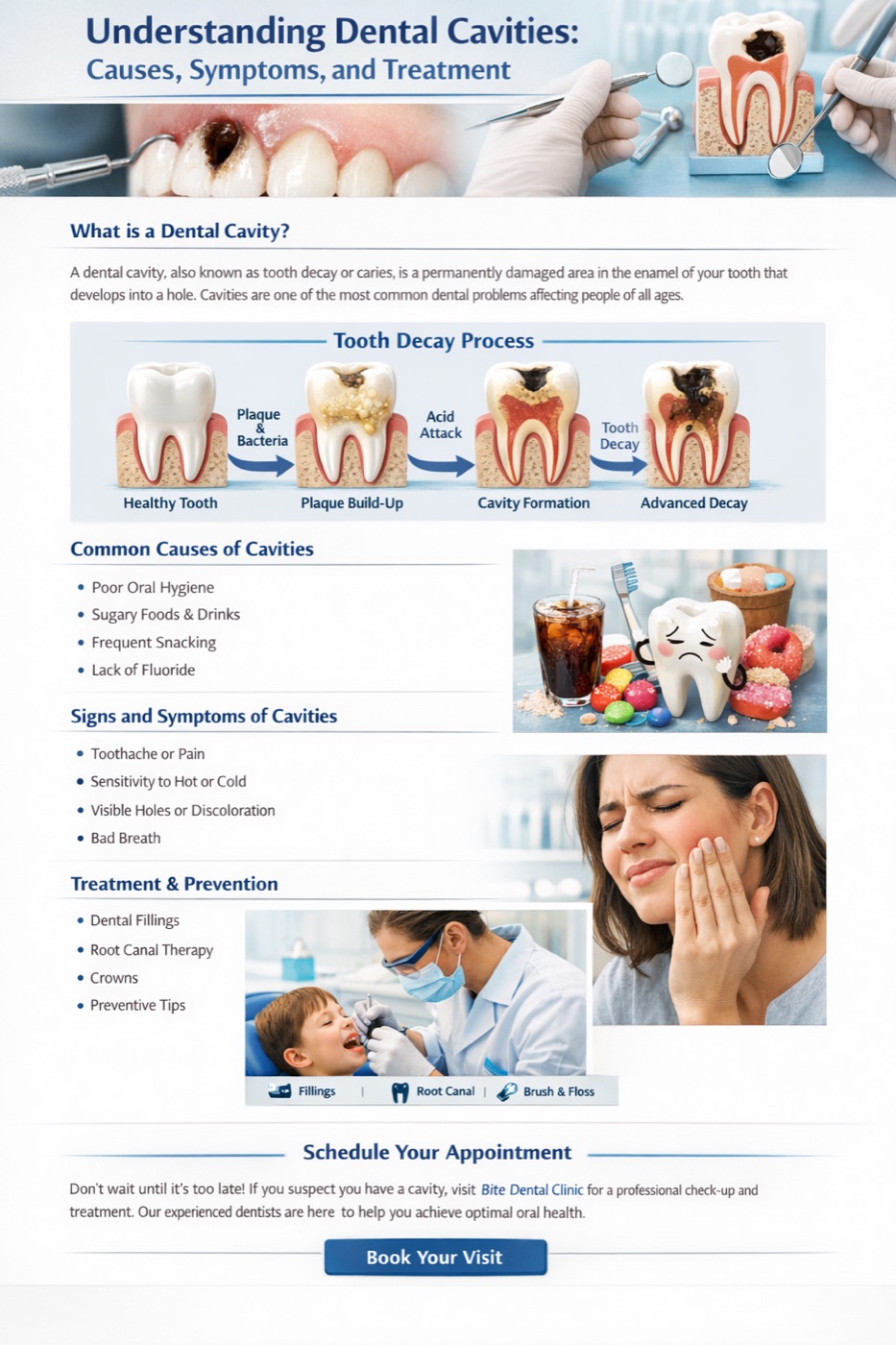
Inside every tooth is a small channel — the root canal — containing pulp tissue (nerves, blood vessels, connective tissue). When bacteria reach this pulp through a deep cavity or a cracked tooth, infection sets in. That's when you feel the throbbing toothache that sends people to us at midnight.
A root canal cleans out that infected pulp, shapes the canals, and seals them permanently. It saves the tooth. Without it, the infection spreads into the bone and the tooth must be extracted.
Why the Old Way Took 3 Appointments
Traditionally, the process looked like this:
- Visit 1: Open the tooth, drain the infection, place temporary medication
- Visit 2: Check that infection has cleared, continue cleaning
- Visit 3: Fill the canals and place a crown
This was partly technique, partly technology, and partly caution. Modern endodontics has made all three sessions unnecessary for most cases.
What's Different Now
Rotary instruments: Modern nickel-titanium rotary files clean and shape root canals in minutes rather than the tedious manual filing of older techniques. They're also more precise, reducing the risk of canal perforation.
Digital X-rays: Instant, high-resolution images let us assess canal anatomy and treatment progress without darkroom delays.
Apex locators: An electronic device that tells us precisely when we've reached the end of the root canal — no guesswork, no repeat X-rays.
Better irrigation protocols: Ultrasonic activation of irrigant solutions kills bacteria far more effectively than syringe irrigation alone.
Single-visit science: Multiple studies have confirmed that single-visit root canals have equivalent success rates to multi-visit procedures for most case types — including cases with active infection.
What Actually Happens in a Single-Session Root Canal at Bite Dental
Anaesthesia (3-5 minutes): We use articaine — a newer local anaesthetic that's more effective in inflamed tissue than older alternatives. Most patients feel nothing beyond a brief pinprick.
Rubber dam placement: A small sheet of latex isolates the tooth and keeps it dry and bacteria-free throughout.
Access opening: A small hole through the top of the tooth to reach the canals.
Canal shaping (15-25 minutes): Rotary instruments clean and shape the canals while we constantly irrigate with sodium hypochlorite solution.
Obturation (10 minutes): The cleaned canals are filled with gutta-percha (a biocompatible rubber material) and sealed with a cement.
Temporary crown (5 minutes): A temporary crown goes on immediately. We schedule a permanent ceramic crown for 1-2 weeks later.
Total chair time: 60-90 minutes for most single-rooted teeth. Molars with 3-4 canals may take slightly longer or, in complex cases, may need a second visit.
Will It Hurt?
During the procedure: No. The tooth is completely numb. The most common sensation is pressure, not pain.
After the anaesthetic wears off: Some soreness for 2-3 days, managed easily with standard anti-inflammatories like ibuprofen. Most patients return to work or normal activity the same or next day.
When Is Single-Visit Not Possible?
We're honest with you. Some cases still benefit from two visits:
- Teeth with very complex canal anatomy (curved, calcified, or extra canals)
- Active swelling that hasn't been drained
- Retreatment of a previously root canal-treated tooth
- When we need a specialist opinion
We'll always tell you upfront which category your case falls into.
The Cost of Not Treating
Delaying root canal treatment doesn't make the problem go away — it makes it worse. The infection spreads to surrounding bone, adjacent teeth may be affected, and what was a straightforward root canal becomes an extraction. An implant to replace an extracted tooth costs significantly more than a root canal + crown.
If you're in pain — or if a dentist has told you that you need a root canal — don't wait. Book an emergency slot at Bite Dental. We'll have you comfortable within the hour.
Emergency dental appointments available at both our West Delhi (Meera Bagh) and Gurugram (222, Sector 51) locations.