Do You Need a Crown After a Root Canal? How to Decide
"My root canal is done. Why do I need a crown too?"
It is one of the most common questions after treatment, and it deserves a straight answer: a root canal treats the infection inside the tooth, while a crown protects what is left of the tooth from breaking. They solve two different problems.
What a root canal changes
During a root canal, we remove the infected or inflamed pulp from inside the tooth, clean the canals and seal them. That stops the infection and often relieves the pain. But the tooth you are left with has usually lost a lot of its structure: first to decay or a crack, and then to the access opening we make to reach the canals.
A tooth with less structure left is more fragile. Chewing forces, especially on back teeth, can crack it. If it cracks below the gumline, the tooth may not be savable.
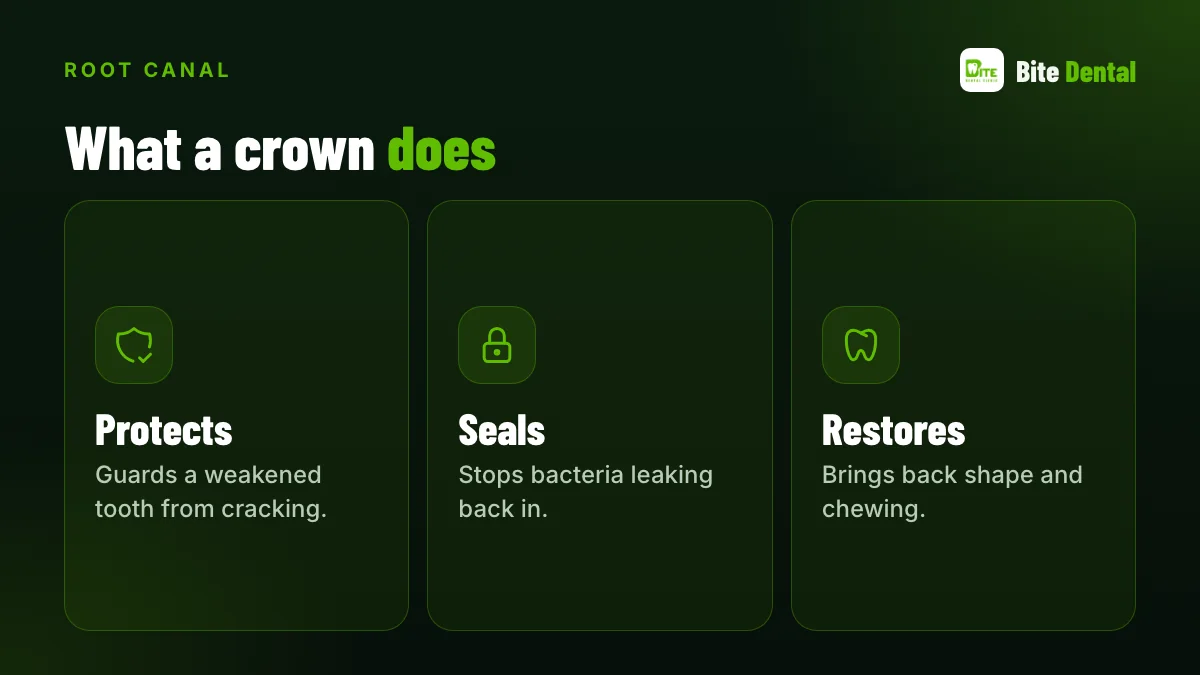
What a crown does
- Protects the weakened tooth from cracking under chewing pressure
- Seals the top of the tooth so bacteria cannot leak back in
- Restores the shape and chewing function
Who usually needs a crown
- Back teeth (molars and premolars). They take the heaviest chewing load.
- Teeth with a large cavity or a large old filling.
- Teeth with a crack.
- Teeth that have lost a lot of structure for any reason.
When a filling may be enough
Some front teeth that have little damage, or teeth with plenty of healthy structure left, can be restored with a strong tooth-coloured filling. Your dentist will advise after examining the tooth and your bite. We do not recommend a crown unless it is likely to help.
How long can I wait?
Ideally you get the final restoration placed soon after the root canal, within a few weeks, as your dentist advises. A long delay raises the risk of the tooth fracturing or the temporary filling leaking. Until then:
- Avoid biting hard foods on that tooth.
- Chew on the other side.
- Call us if the temporary filling comes out.
What happens at the crown visits
- We shape the tooth and take a digital or physical impression.
- A temporary crown protects the tooth while the lab makes your crown.
- At the second visit, we check the fit and bite and cement the final crown.
Materials include zirconia and porcelain-fused-to-metal. We will explain the differences for your tooth on our crowns page.
Looking after a root-treated, crowned tooth
- Brush and floss as normal. The tooth is still susceptible to decay at its edges.
- Avoid using your teeth to open packets or bite very hard objects.
- Tell us if you grind your teeth. A night guard can protect crowns.
- Keep up regular check-ups and X-rays.
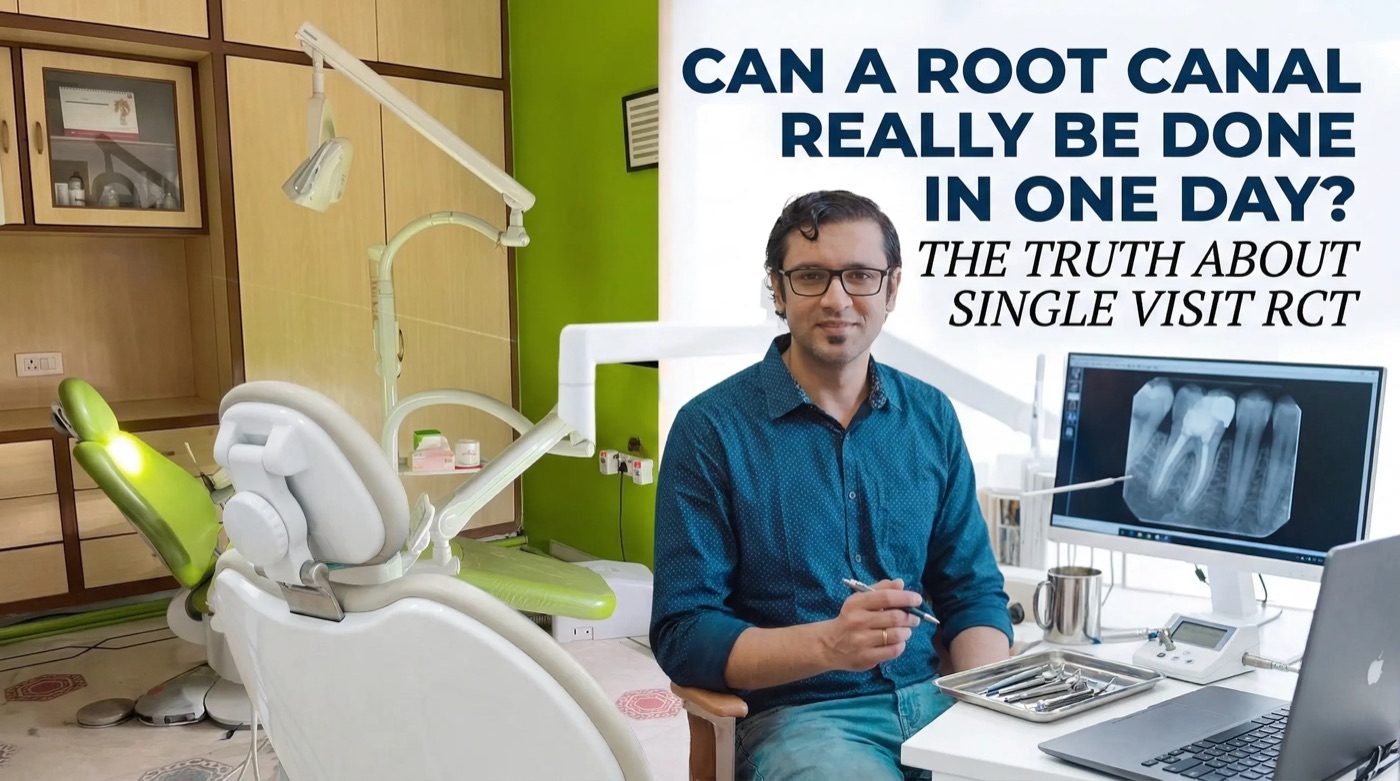
For a clear picture of the treatment itself, see our guide to single-visit root canals, or visit our root canal page.
Book a check at Bite Dental: A-52, Meera Bagh, New Delhi 110087 (+91 75339 51611) or MedHarbour Hospital, 1st Floor, Room 222, Sector 51, Gurugram 122003 (+91 98106 64561). Open Monday to Saturday, 10 am to 8 pm. This article is general information and not a substitute for an examination.