Thumb Sucking and Pacifiers: When to Worry and How to Help
Thumb sucking is normal, up to a point
Babies and toddlers suck their thumbs or a pacifier because it soothes them. In most children, the habit fades by itself between ages two and four. It usually becomes a dental concern only if it continues once the adult front teeth are about to come in, usually around age five to six, or if it is very frequent and forceful.
What it can do to teeth
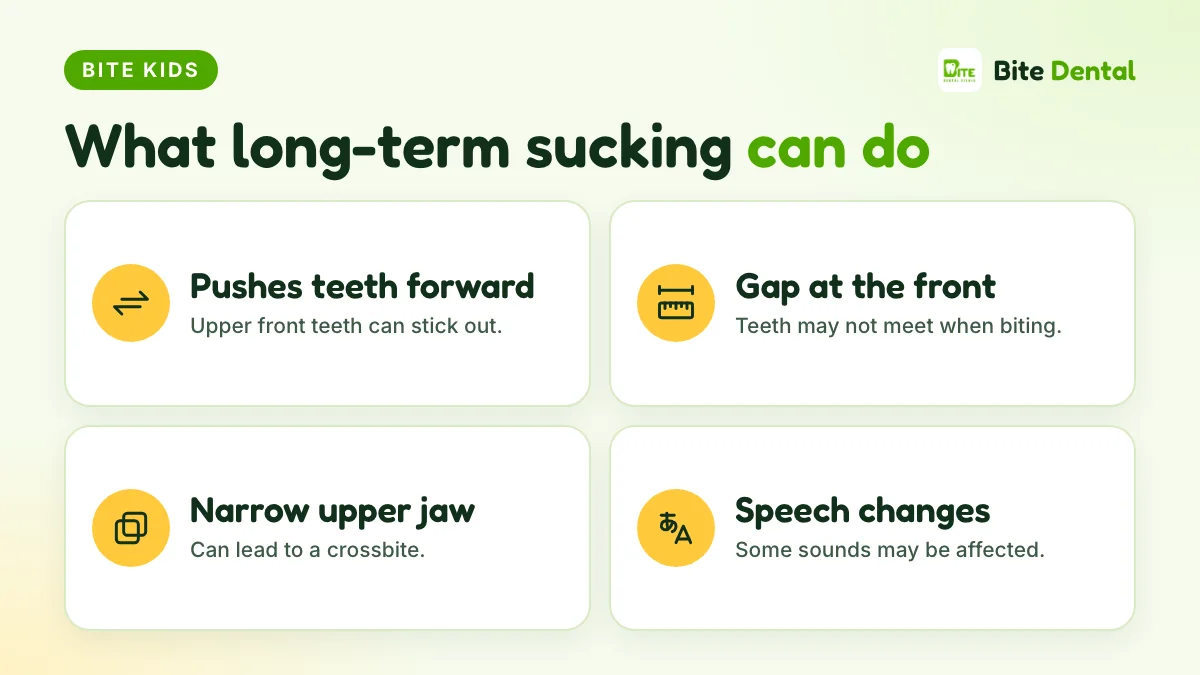
Prolonged or intense sucking can:
- Push the upper front teeth forward (an "open" or protruding bite)
- Leave a gap between upper and lower front teeth when biting
- Narrow the upper jaw, which can lead to a crossbite
- Affect speech in some children, such as certain sounds
The earlier the habit stops, the better the chance that teeth move back by themselves. Every child is different, and some are affected more than others.
Is a pacifier better than a thumb?
A pacifier can cause similar effects. The advantage is that it can be taken away, whereas a thumb cannot. Many dentists suggest weaning from a pacifier by around age two to three. Orthodontic-shaped pacifiers can still affect teeth if used for long.
Gentle ways to help your child stop
- Do not scold or shame. Pressure often makes the habit stronger.
- Find out when it happens. Is it boredom, tiredness or anxiety? Address the cause.
- Offer a comfort alternative, such as a soft toy or blanket.
- Praise and reward days without the habit. A simple sticker chart works for many children.
- Keep hands busy during TV or car journeys.
- Make it their decision. Older children often succeed when they want to stop, with support from you.
- Ask your dentist about reminder appliances if the habit continues and is affecting teeth. These are usually reserved for older children who want help.
When to see a dentist
Book a visit if your child:
- Still sucks a thumb or pacifier regularly at age four or five
- Has front teeth that stick out, or teeth that do not meet at the front
- Has changes in speech
- Has a sore, red or cracked thumb
A check lets us see how teeth and jaws are developing and suggest the right time to act. If an orthodontic opinion is helpful, we can arrange it. See our braces for teenagers guide for how timing works.
Remember
The habit is a comfort, not a failing. With patience, most children stop, and teeth often improve afterwards. Our kids dentistry page explains how we make visits calm and friendly.
Book a children's check-up with Dr. Achla Goel at Bite Dental: A-52, Meera Bagh, New Delhi 110087 (+91 75339 51611) or MedHarbour Hospital, 1st Floor, Room 222, Sector 51, Gurugram 122003 (+91 98106 64561). Open Monday to Saturday, 10 am to 8 pm. This article is general information and not a substitute for an examination.