Why Baby Teeth Matter, Even Though They Fall Out
"They will fall out anyway, so why fix them?"
It is one of the most common things parents tell us. It is understandable, but it is not the full picture. Baby teeth do far more than fill a smile, and problems in them can affect your child's comfort and their adult teeth.
What baby teeth do
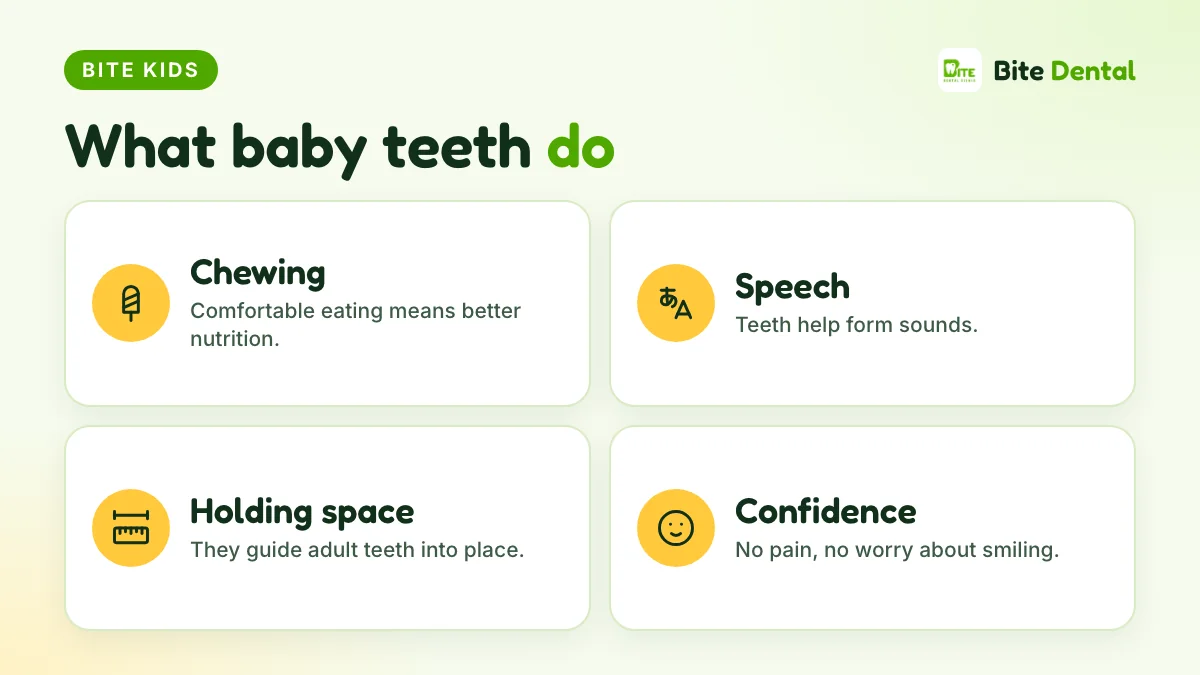
- Chewing and nutrition. A child in pain avoids chewing, and can end up eating less or choosing softer, more sugary food.
- Speech. Teeth help children form certain sounds as they learn to speak.
- Holding space. Each baby tooth acts as a placeholder that guides the adult tooth into position. Losing one very early can lead to crowding later.
- Confidence and comfort. Pain, swelling or visibly decayed teeth affect sleep, school and smiling.
Why untreated decay in baby teeth is a problem
Baby tooth enamel is thinner than adult enamel, so decay can spread faster. A cavity can reach the nerve and cause pain or an abscess. An infection in a baby tooth can affect the developing adult tooth underneath. Left alone, a cavity does not heal itself. That is why we treat them, often with a simple filling, a paediatric crown, or when needed a gentle pulp treatment.
When do baby teeth fall out?
Roughly:
- 6 to 7 years: lower front teeth begin to loosen.
- 6 to 12 years: baby teeth are gradually replaced.
- 10 to 12 years: the back baby molars usually fall out last.
Every child is on their own timeline. The back baby molars need to last the longest, which is why protecting them matters most.
How to protect your child's teeth
- Start early. Wipe gums after feeds and start brushing when the first tooth appears.
- Brush twice a day with a smear of fluoride toothpaste for under-3s and a pea-sized amount from 3 to 6, with an adult helping until about age 7 or 8.
- Watch the sugar, especially sticky sweets, sweet drinks and frequent snacking. How often matters as much as how much.
- No milk or juice bottle at bedtime without brushing afterwards.
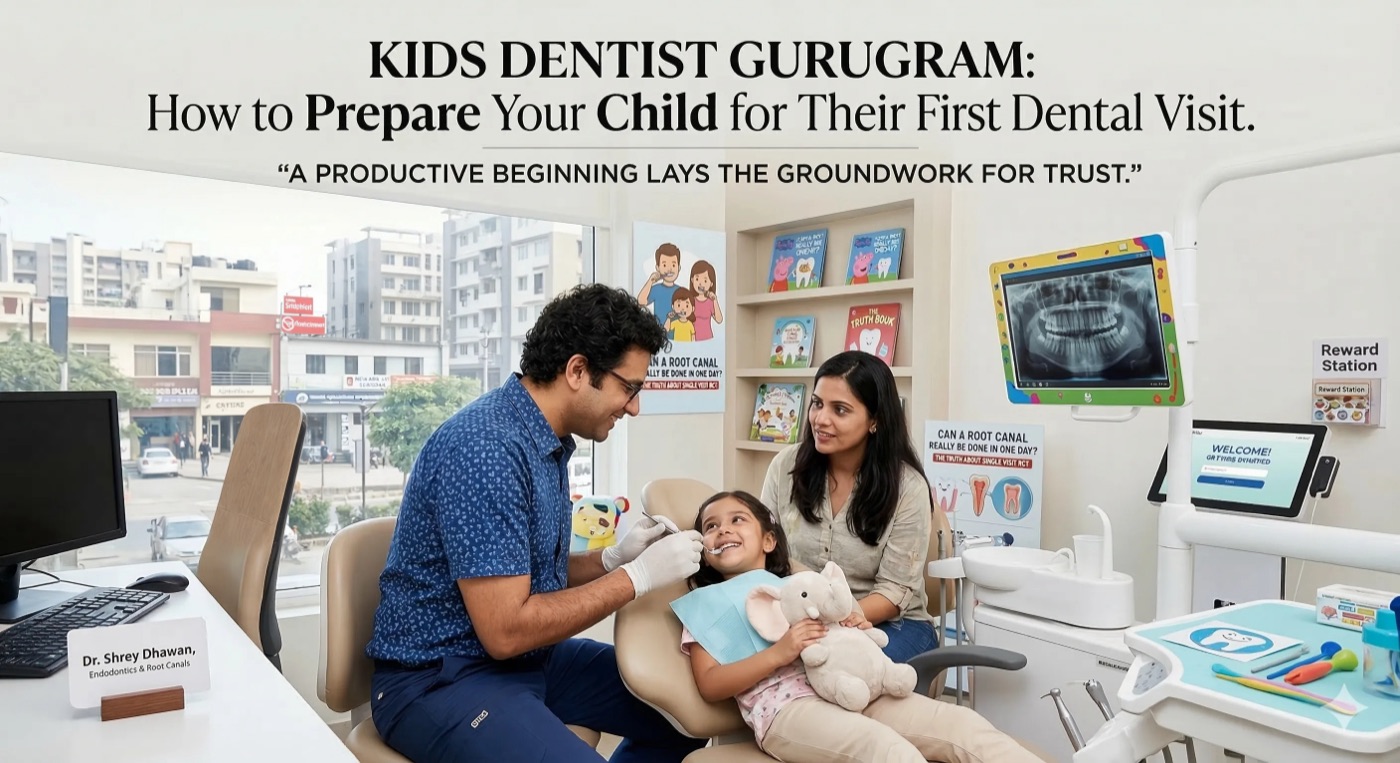
- Visit the dentist regularly. The first visit is best around the first birthday or when the first tooth shows. Our guide to preparing your child for a first visit helps.
- Ask about preventive options such as fluoride varnish and sealants for the deep grooves of back molars.
What if my child is scared?
Children pick up on our tone. We take our time, show and explain each step in simple words, and let kids see the equipment first. If your child has had a rough experience before, tell us and we will plan a slower, friendlier first visit. You can read more on our kids dentistry page.
Signs to bring your child in sooner
- Brown or white spots on a tooth
- Complaints of pain with hot, cold or sweet foods
- Swelling of the gum or face
- A tooth that has been knocked or chipped
- Persistent bad breath
Book a children's check-up with Dr. Achla Goel at Bite Dental: A-52, Meera Bagh, New Delhi 110087 (+91 75339 51611) or MedHarbour Hospital, 1st Floor, Room 222, Sector 51, Gurugram 122003 (+91 98106 64561). Open Monday to Saturday, 10 am to 8 pm. This article is general information and not a substitute for an examination.