Teeth Grinding (Bruxism): Signs, Causes and the Night Guard
Grinding is often invisible to the person doing it
Many people grind or clench their teeth at night, and only find out when a partner hears it or a dentist spots wear on the teeth. This habit is called bruxism. Occasional grinding is common, but frequent grinding can damage teeth and strain the jaw.
Signs you may be grinding
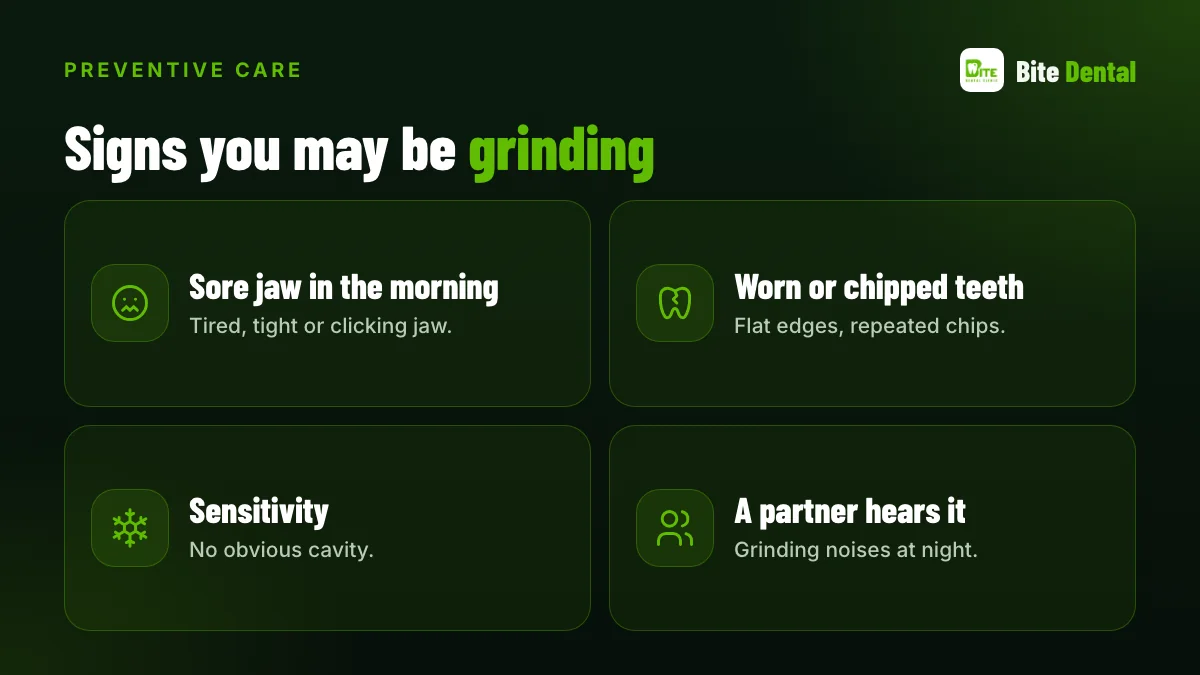
- A tired or sore jaw in the morning
- Headaches, often around the temples
- Flat, worn or chipped teeth
- Tooth sensitivity with no obvious cavity
- Clicking or tight jaw joints
- Tongue or cheek ridges where you press them against your teeth
- A partner who hears grinding at night
These signs can have other causes, so an examination is the only way to confirm.
Why does it happen?
The exact cause is not always clear, and it often has several contributors:
- Stress and anxiety
- Poor sleep, including snoring and sleep apnoea
- Caffeine, alcohol and tobacco
- Bite problems or missing teeth, in some cases
- Certain medicines
What grinding can do to your teeth
Over time, grinding can wear down enamel, cause cracks, loosen fillings and crowns, and contribute to jaw pain. It can also put extra load on implants and new restorations, so mention it if you are planning an implant or crown.
How a night guard helps
A night guard (occlusal splint) is a custom-made, comfortable plastic guard worn at night. It does not stop you from grinding, but it cushions and spreads the forces, so your teeth wear against the guard rather than against each other.
- Custom-made from an impression or scan, so it fits comfortably. Shop-bought guards can be bulky and may not protect well.
- Easy to care for. Rinse and brush it daily and keep it in a case.
- Reviewed regularly. We check it for wear and fit at your visits.
Other things that can help
- Manage stress: exercise, a wind-down routine and enough sleep help many people.
- Cut back on caffeine and alcohol, especially in the evening.
- Avoid chewing gum and pen caps, which keep jaw muscles working.
- Relax your jaw during the day. Aim for lips together, teeth apart.
- Check for sleep problems if you snore loudly or wake unrefreshed. Speak to your doctor.
When to see a dentist
If you notice worn teeth, jaw pain, repeated chipped fillings or morning headaches, book a check. We will look at your teeth, your bite and your jaw joints, and talk through the options. Learn more about sensitivity and protecting your crowns.
Book a bite check at Bite Dental: A-52, Meera Bagh, New Delhi 110087 (+91 75339 51611) or MedHarbour Hospital, 1st Floor, Room 222, Sector 51, Gurugram 122003 (+91 98106 64561). Open Monday to Saturday, 10 am to 8 pm. This article is general information and not a substitute for an examination.