Understanding Cavities: Causes, Prevention & Treatment
What Is a Cavity?
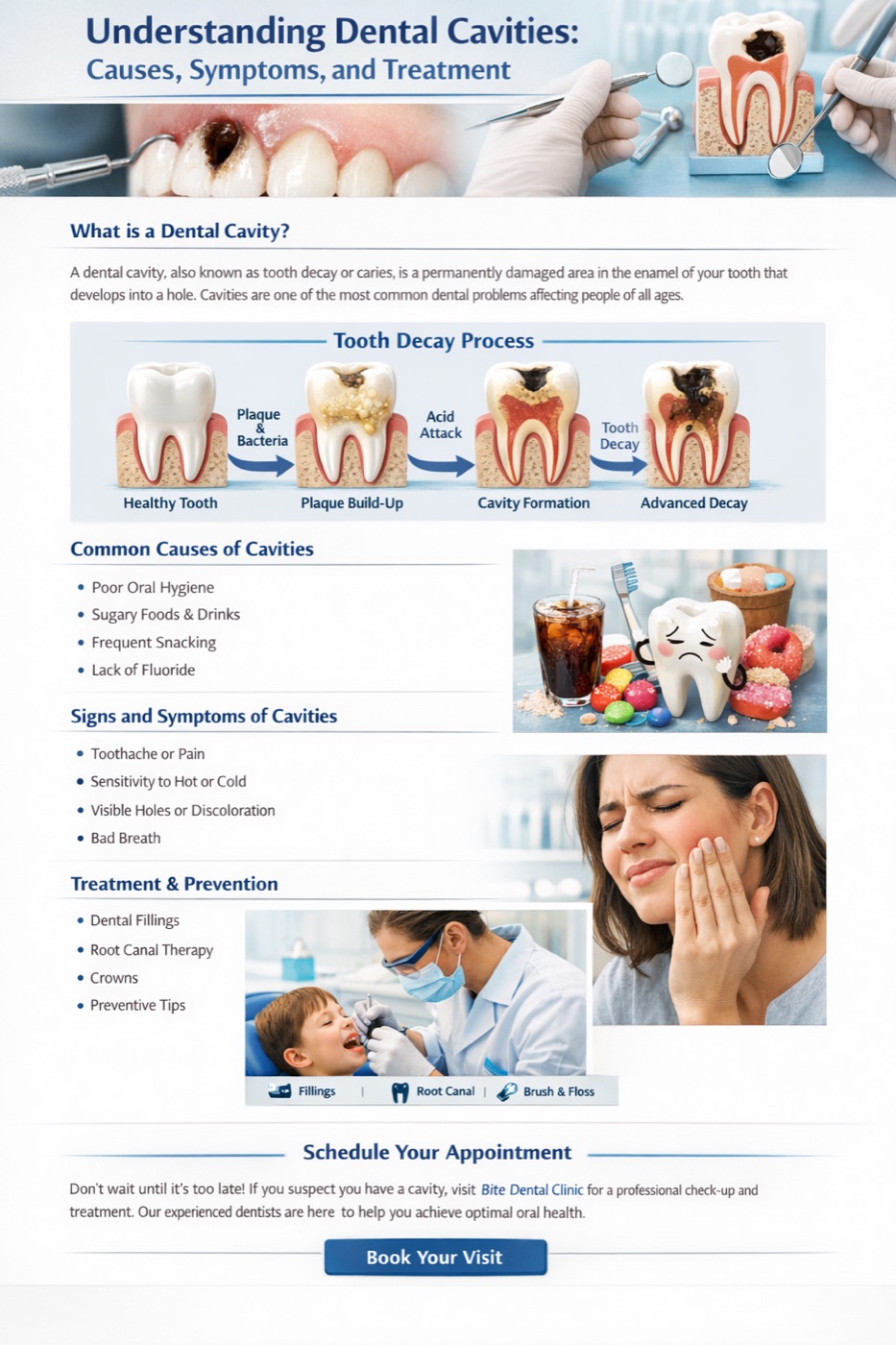
A cavity — also called dental caries — is permanent damage to a tooth's hard surface (enamel) that forms a tiny hole. Left untreated, cavities grow deeper, reaching the softer dentine and eventually the inner pulp, causing pain, infection, and in worst cases, tooth loss.
At Bite Dental, we see cavities at every stage — and treat them all. But prevention is always our first priority.
Why Do Cavities Form?
The short answer: bacteria + sugar + time. Your mouth naturally contains bacteria. When you eat sugary or starchy foods, those bacteria feast on the carbs and produce acid as a byproduct. That acid gradually dissolves your enamel, creating the pockets we call cavities.
Key risk factors include:
- Frequent snacking or sipping sugary drinks (including fruit juice and sports drinks)
- Poor brushing and flossing habits
- Dry mouth (saliva is your mouth's natural cavity-fighter)
- Deep grooves in back teeth that trap food
- Worn or cracked old fillings
- Acid reflux, which exposes teeth to stomach acid
How We Catch Them Early
The tricky thing about cavities is that they often have no symptoms in the early stages. By the time you feel pain, the decay is already significant.
This is exactly why we recommend 6-monthly check-ups at Bite Dental. We use digital X-rays that expose you to up to 90% less radiation than traditional films — and can spot cavities between teeth that no eye exam could catch.
Treatment Options at Bite Dental
Small cavities: A tooth-coloured composite filling, placed in a single appointment with zero discomfort under local anaesthetic.
Medium cavities: A slightly larger composite or a ceramic inlay — still cosmetically invisible, still durable.
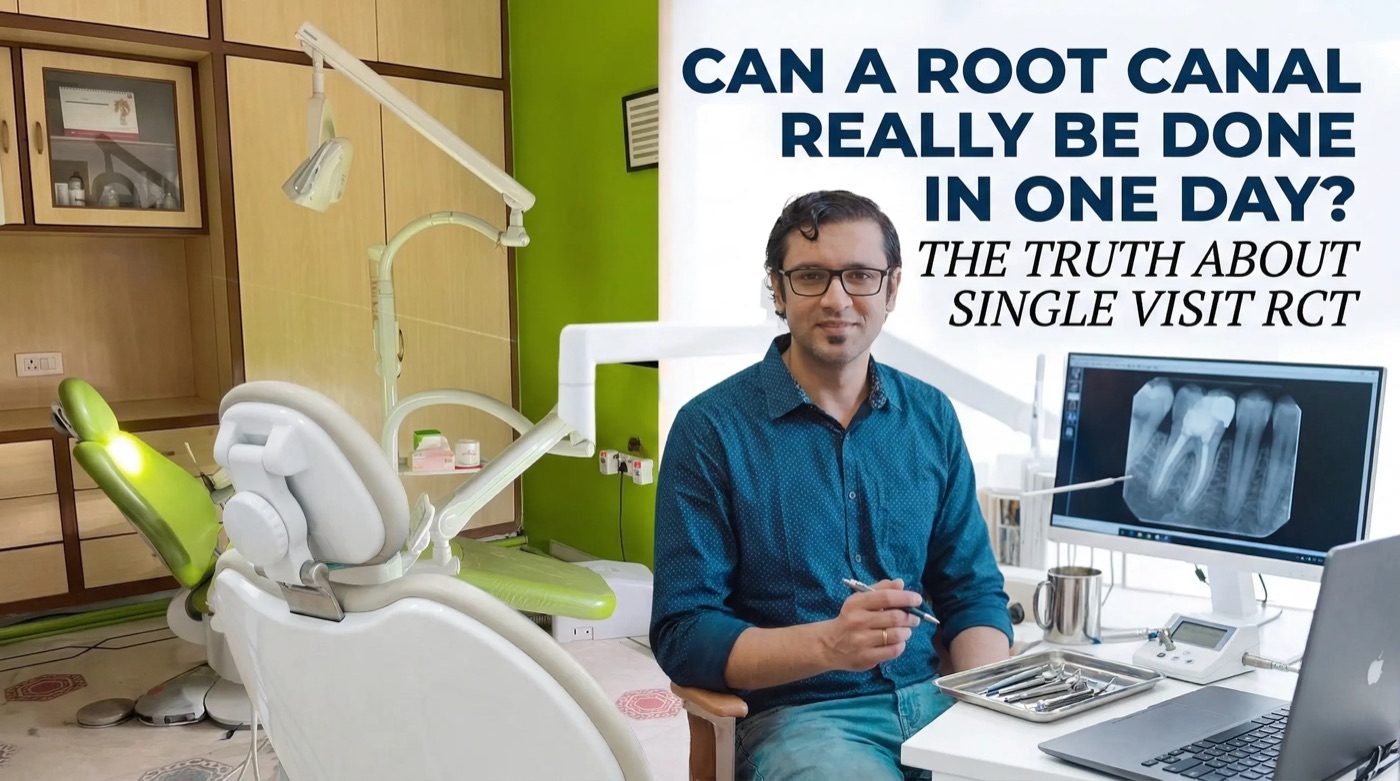
Large cavities reaching the pulp: A root canal followed by a crown. Our endodontics specialist completes most cases in one visit (see our root canal post).
Severely damaged teeth: When there's too little tooth structure left to save, we discuss extraction and replacement options like dental implants.
Prevention: The 5-Minute Daily Habit That Changes Everything
- Brush twice daily — 2 full minutes, using a soft-bristle brush and fluoride toothpaste
- Floss once daily — between every tooth, not just when something's stuck
- Limit sugary snacks — it's not just what you eat, it's how often you expose your teeth to sugar
- Drink more water — especially fluoridated municipal tap water
- Visit us every 6 months — a professional clean removes tartar that brushing can't touch
A Word About Fluoride
Fluoride is one of the most evidence-backed tools in dentistry. It remineralises early-stage decay before it becomes a cavity. We apply fluoride varnish at every routine appointment for children — and offer it to adults too.
Noticed sensitivity to cold or sweet foods? That's often the first sign of enamel wear or early decay. Book a free consultation at Bite Dental and we'll catch it before it becomes a problem.