How Long Do Clear Aligners Take? A Realistic Timeline
The honest answer: it depends
Ads often quote a number of months. In reality, aligner treatment can range from a few months for minor spacing to a year or more for complex crowding or bite correction. Anyone who promises a fixed timeline before examining you is guessing. What we can do is explain what controls the timeline, so your expectations are realistic.
What decides how long it takes
- How far the teeth need to move. Small gaps move quicker than rotated, crowded teeth.
- The type of movement. Tipping a tooth is easier than rotating or bodily moving it.
- Bite correction. Fixing an overbite or crossbite takes longer than aligning front teeth.
- Your age and bone response. Teeth tend to move a little more slowly in older adults, although age is no barrier.
- Wear time. Aligners work for about 20 to 22 hours a day. This is the biggest factor you control.
- Attachments and elastics. Small tooth-coloured bumps and rubber bands are used to make certain movements happen.
A typical journey, step by step
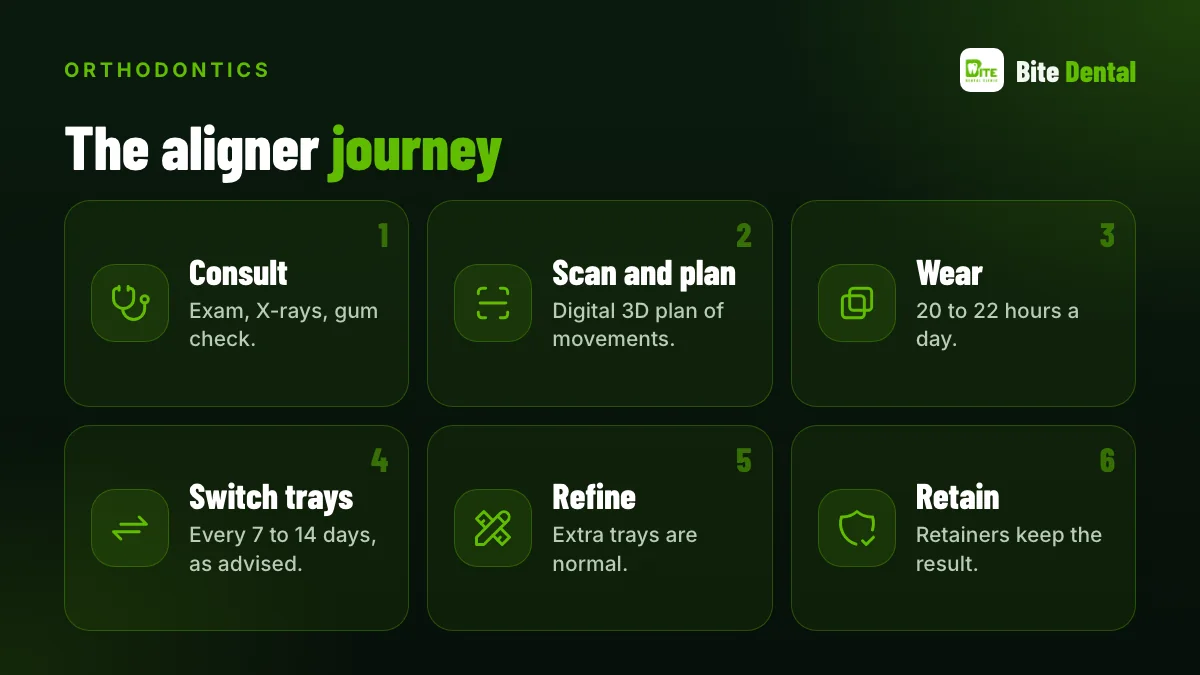
- Consultation and examination. We check teeth, gums and bite and take X-rays or photos. If gum disease or cavities exist, we treat those first.
- Digital scan and plan. A 3D scan lets us design the planned tooth movements and show you the likely end position on screen.
- Aligners arrive. Usually within a few weeks. You start with a fitting appointment.
- Wearing the trays. You switch to a new set about every 7 to 14 days, as advised. Check-ins are less frequent than with braces.
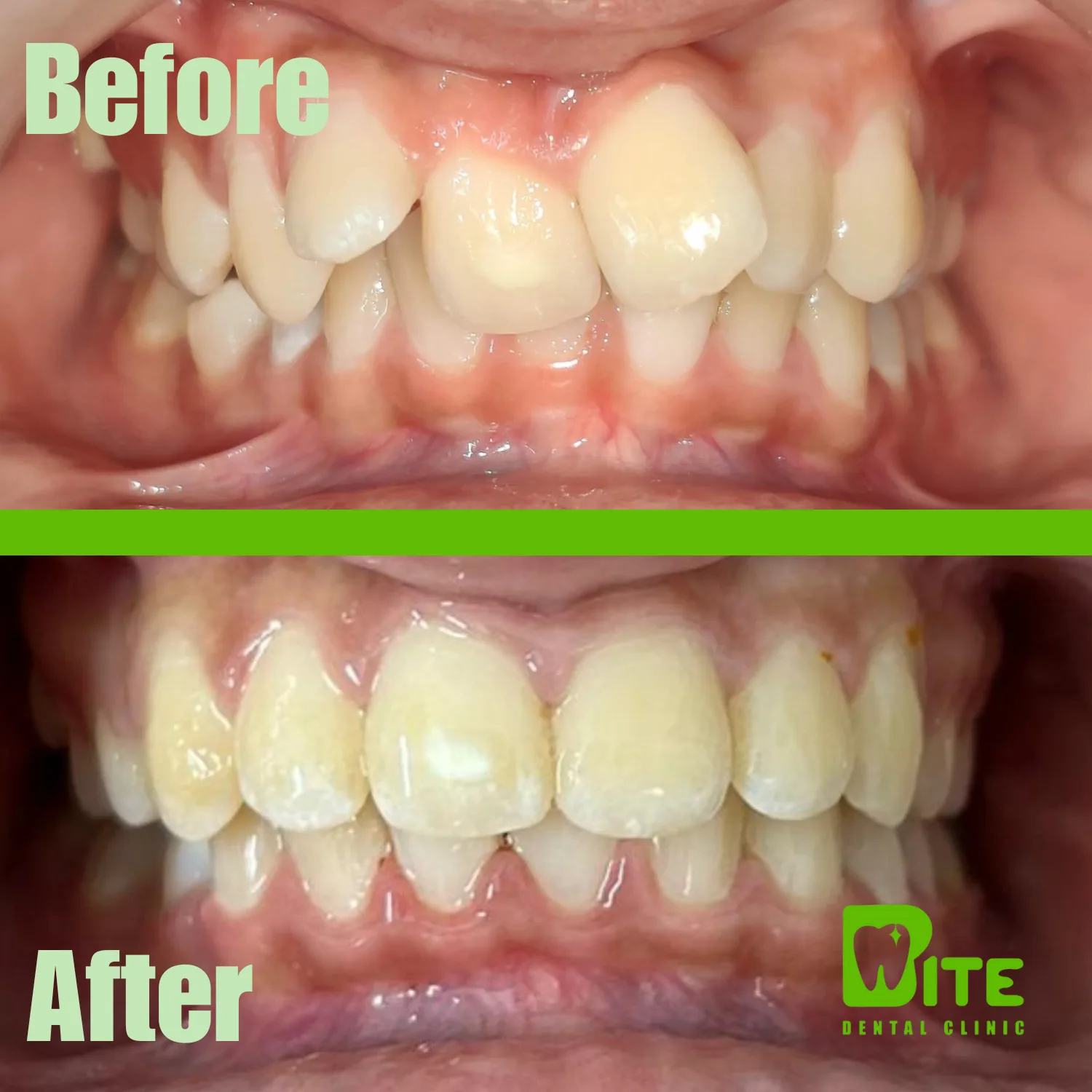
- Refinements. Many cases need a small set of extra aligners at the end for fine adjustments. This is normal and not a sign that something went wrong.
- Retainers. Once teeth are aligned, retainers keep them there. This is a lifelong habit and not an optional extra.
What makes treatment run slower
- Wearing aligners fewer than 20 hours a day
- Skipping to the next tray early before teeth have caught up
- Missing appointments or not following instructions
- Lost or broken aligners, which can cost you a step or two
- Complex movements that need a plan change midway
Aligners or braces, which is faster?
Neither is automatically faster. Some cases move just as well with aligners; others, particularly complex bite problems, can be handled more predictably with braces. We help you choose based on your case rather than on what is popular. Our comparison guide, braces vs. aligners, goes into this in detail, and you can see our options on the braces and aligners page.
Tips to stay on schedule
- Keep a case with you so aligners never end up wrapped in a napkin.
- Brush before you put them back in.
- Set a phone reminder to switch trays on the right day.
- Wear your retainers after treatment as instructed.
- Message us early if a tray cracks or feels wrong. A small issue is easy to fix when caught quickly.
What a first visit looks like
We aim to give you an honest view: whether aligners suit your teeth, what the likely time range is, and what the commitment is. If braces or another option would work better for you, we will tell you.
Book an aligner consultation at Bite Dental: A-52, Meera Bagh, New Delhi 110087 (+91 75339 51611) or MedHarbour Hospital, 1st Floor, Room 222, Sector 51, Gurugram 122003 (+91 98106 64561). Open Monday to Saturday, 10 am to 8 pm. Treatment times vary between patients; this article is general information.