Can a Root Canal Really Be Done in One Day? The Truth About Single Visit RCT
- Shrey Dhawan
- 3 days ago
- 8 min read

"Written by Dr. Shrey Dhawan, Endodontics Specialist – Expert in Root Canals."

1. Introduction: The Death of the "Three-Appointment" Root Canal

If you’ve ever had a toothache, you know the fear. You visit the dentist, and they utter those two terrifying words: “Root Canal. In the olden days, hearing this meant that you were about to prepare to spend the next three weeks in and out of a dentist’s office. It was a project that felt like it would never end. Many people believe that a root canal is a lengthy, painful process that never seems to end.
But a whole lot has changed recently. Welcome to a fast-paced world where everything is moving fast, including dentistry. The old “three-appointment” root canal is going the way of the dodo. Recently, there are many dentists who offer Single Visit RCT.
But what exactly is it? Simply put, Single Visit RCT is when the dentist cleans out the infection and seals your tooth all in one single meeting. No more walking around with a temporary filling for two weeks while you wait for your next appointment. In this blog, we are going to look at how this works, if it is actually safe, and if it is the right choice for your teeth.
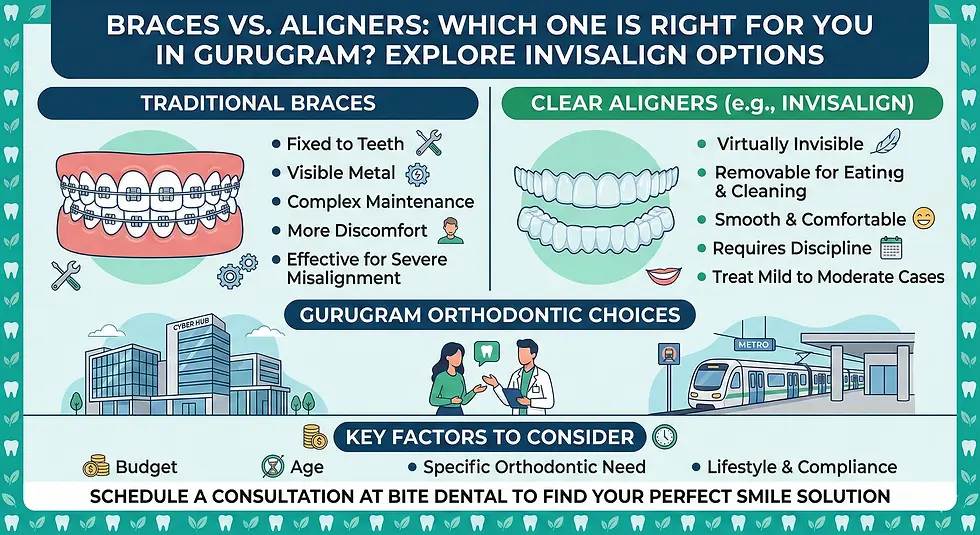
"To learn more about the differences between braces and Invisalign, check out our Braces vs. Invisalign comparison guide."
2. How is a One-Day Root Canal Even Possible?

You might be wondering, "How can they do in one hour what used to take three weeks?" It’s not because the dentists are rushing or cutting corners. It is because the tools they use now are much smarter than the ones they used 20 years ago.
High-Tech Dentistry
In the old days, dentists used small hand tools to manually scrub the inside of your tooth. It was slow and tiring. Now, they use something called Rotary Endodontics. These are electric tools that are very flexible and can clean the inside of a tooth much faster and more deeply. They also use Digital Apex Locators. This is a little machine that tells the dentist exactly how long your tooth root is so they don't have to guess. This makes a Single Visit RCT very predictable and fast.
3D Imaging (CBCT)
Another big game-changer is 3D X-rays, also known as CBCT. Usually, a normal X-ray is flat, like a photo. But a CBCT scan lets the dentist see your tooth from every single angle. They can see exactly where the infection is hiding before they even start. Because they have a "map" of your tooth, they can finish the Single Visit RCT without any surprises popping up halfway through.
3. Single Visit RCT: Step-by-Step Procedure

If you are nervous about what actually happens during a Single Visit RCT, don't worry. It is pretty straightforward. Think of it like a deep cleaning for the inside of your tooth. Here is how the dentist does it in one sitting:
Step 1: Rapid Digital Diagnosis
First, the dentist takes a special digital X-ray. Unlike the old film X-rays that took forever to develop, these show up on a computer screen instantly. The dentist looks for the infection and plans the path. This is the "map" for your Single Visit RCT.
Step 2: Advanced Local Anesthesia (The "Painless" Start)
People fear the needle most of the time. But new numbing is awfully effective. The dentist will numb your mouth so you won’t feel anything. Now you’re numb, the balance of the Single Visit RCT is similar to regular filling but longer.
Step 3: Precision Cleaning with Rotary Files
Now the dentist accesses the tooth and uses those flexible “rotary files” we discussed. They are spun fast and gentle to wash away all the dead nerves and bacteria. These tools are so much more precise that they can clean the entire canal system in just a few minutes.
Step 4: Immediate 3D Sealing (Obturation)
Once the tooth is cleaned, it needs to be filled back up so that bacteria can’t return. The dentist then dried the canal and filled it with a rubbery material called gutta-percha in a Single Visit RCT. This special method ensures that the seal penetrates every crack and crevice in the part.
Step 5: Same-Day Temporary or Permanent Restoration
They then seal the tooth’s top. Depending on your condition, your dentist may be put a temporary tooth filling or permanent one. Some offices even have machines that can carve out a permanent cap (a tooth cap) the same day. Which means you enter with a sore tooth and exit with a fully healed tooth.
"For a comprehensive guide on dental implants and their benefits, read our Dental Implants Guide."
4. Is One Visit as Effective as Two? (The Data)
A lot of people ask, "Is it really as good as the old way?" They worry that the dentist is rushing and might miss some bacteria. But the data actually shows something different.
Success Rates: Comparing the Outcomes
Studies have shown that the success rate for a Single Visit RCT is almost exactly the same as a multi-visit one. In fact, many experts believe that if the tooth is "live" (not dead or full of pus), doing it in one day is actually better.
Why "One and Done" is Often Better
When a dentist does a root canal over two or three weeks, they have to put a temporary filling in between. Sometimes, that temporary filling can leak or fall out. If that happens, new bacteria can get inside the tooth and cause a new infection. By finishing the Single Visit RCT in one go, you never give the bacteria a second chance to get back in. It keeps the tooth "sterile" from start to finish.
"If you're looking for a painless dental experience, discover more about painless dentistry in Gurugram in our Painless Dentist Guide."
5. Are You a Candidate? (The Checklist)
Not every tooth is the same. Just like some car repairs are quick and some take days, not every tooth can have a Single Visit RCT. Your dentist will look at your tooth and decide if you are a "Green Light" or a "Yellow Light."
Green Light: When it’s Perfect
If your tooth is still "alive" (meaning the nerve is hurting but not totally dead yet) and the infection hasn't spread deep into the bone, you are a great candidate for a Single Visit RCT. Also, if the tooth has straight roots and is easy to reach, the dentist can usually finish everything in one go. Most simple cases are perfect for this "one and done" style.
Yellow Light: When it’s Complicated
Sometimes, the dentist might see something tricky. If you have a very big abscess (a pocket of pus) or if your face is really swollen, they might want to wait. In these cases, they might put some medicine inside the tooth and ask you to come back in a week. This gives the medicine time to kill the extra bacteria before they finish the Single Visit RCT.
When Multi-Visit is Better
If you are having a "retreatment" (fixing a root canal that was done years ago and failed), that usually takes two visits. Also, if your tooth has very curvy or "C-shaped" canals, the dentist might take their time to make sure they don't miss any tiny spots. It’s always better to be safe than sorry!
6. Addressing Your Biggest Fears (The Pain Points)
Most people get nervous when they hear "Root Canal," and they get even more nervous thinking about doing it all at once. Let’s clear up some of those fears.
“Will it hurt more?”
This is the number one question. The answer is: No. The numbing medicine used for a Single Visit RCT is the same as any other dental work. Because the dentist uses high-tech tools, they actually disturb the tooth less than they used to. Most people say it feels just like getting a big filling.
“My jaw can’t stay open that long”
It’s true that a Single Visit RCT takes a bit longer than a normal filling—usually about an hour. If your jaw gets tired, dentists have a soft rubber "bite block" you can rest your teeth on. It holds your mouth open for you so your muscles can relax. You can even ask for a break halfway through if you need to stretch.
“What if it fails because it was rushed?”
As we talked about before, "fast" doesn't mean "rushed." The dentist uses machines that do the work of ten hand tools. A Single Visit RCT is actually very high-quality because the tooth stays sealed the whole time. You aren't walking around with a temporary plug that might let germs in.
7. Recovery: What to Expect After You Leave the Chair
So, you’ve finished your Single Visit RCT. What happens now? Do you need to stay in bed for a week? Definitely not! Most people go right back to work or school the next day.
The First 24 Hours: Managing Mild Soreness
Once the numbness subsides, your jaw may feel slightly fatigued and the tooth may feel “different.” This is normal since the dentist had spent an hour working on the inside of the tooth. Usually, a walk-in-store pain-killer could do the work to make it feels better. As the Single Visit RCT procedure is completed in one day, there will be no need to worry if a temporary filling falls out while you’re asleep!
Diet and Care Tips
For the first day or two, eat soft foods like mashed potatoes, soup or yogurt. Try not to bite down on hard things like ice or hard candy with that particular tooth until your dentist tells you it’s O.K. Although the Single Visit RCT is complete, the space around the tooth requires a bit of time to "settle down."
8. Conclusion: Saving Your Tooth and Your Time
The “old way” of doing root canals slowly is disappearing. When your dentist says that he can do you a Single Visit RCT, it means he is using modern tools to save time and make your procedure comfortable. It’s not about speed; it’s about applying technology to a better job in less time.
Is it right for you? If you lead a busy life and need to fix your tooth pain quickly, Single Visit RCT is the best option. It’s safe, it works as well as the old way, and it gets you back to your normal life far more quickly.
"Parents, avoid common tooth care mistakes with your kids by reading our Top Tooth Care Mistakes for Parents."
"This article was written by Dr. Shrey Dhawan, a leading expert in Endodontics and Root Canals."
9. Frequently Asked Questions (FAQs)
What time frame does a single-visit RCT follow? Normally it takes at least 60 to 90 minutes. It’s a little longer than a filling, but keep in mind — you only have to do it one time!
Is it more expensive? In those cases, the price is typically the same. You may even end up saving money because you won’t pay for the multiple office visits or extra X-rays.
Do I still need a crown? Most of the time, yes. Tooth peg can be slightly brittle after Single Visit RCT. A crown (a cap) covers the tooth and prevents it from cracking down the line.
Can any dentist do this? Not every dentist has the advanced tools for a Single Visit RCT. Before you begin, ask your dentist whether they have “single visit” options.
For More Detail visit Dr. Shrey Dhawan.


Comments